

What Spire measures, and how it is scored
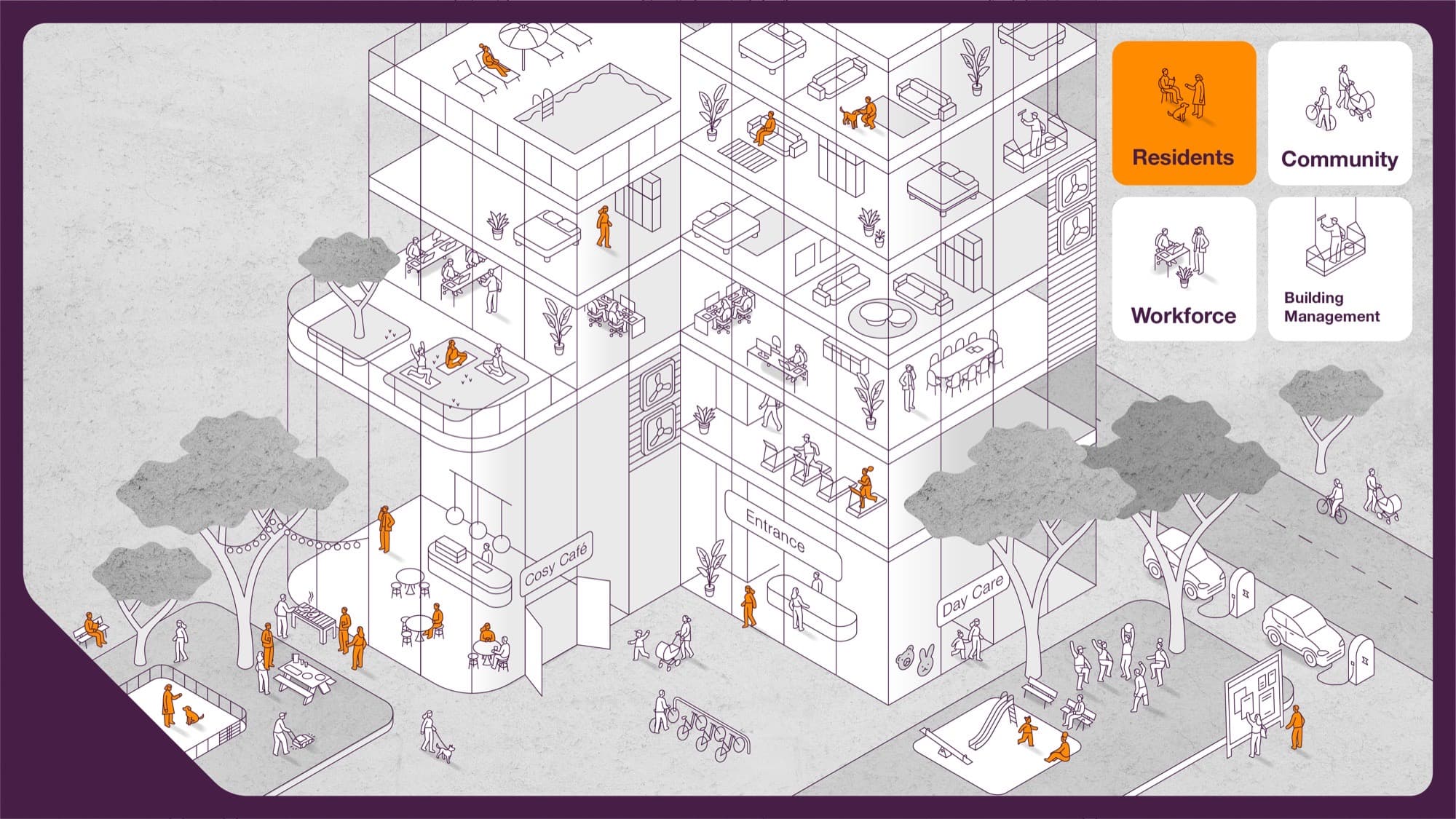
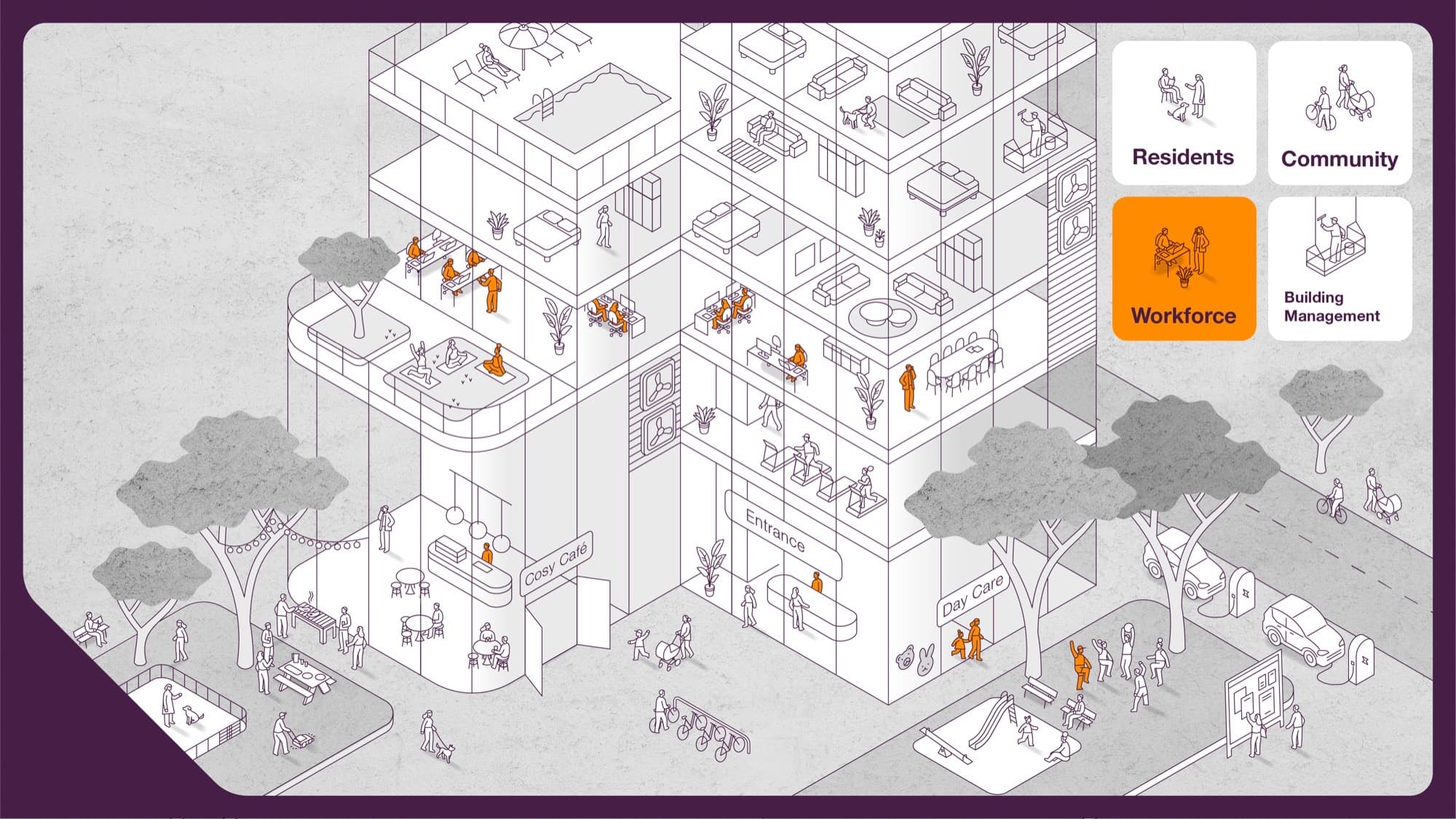
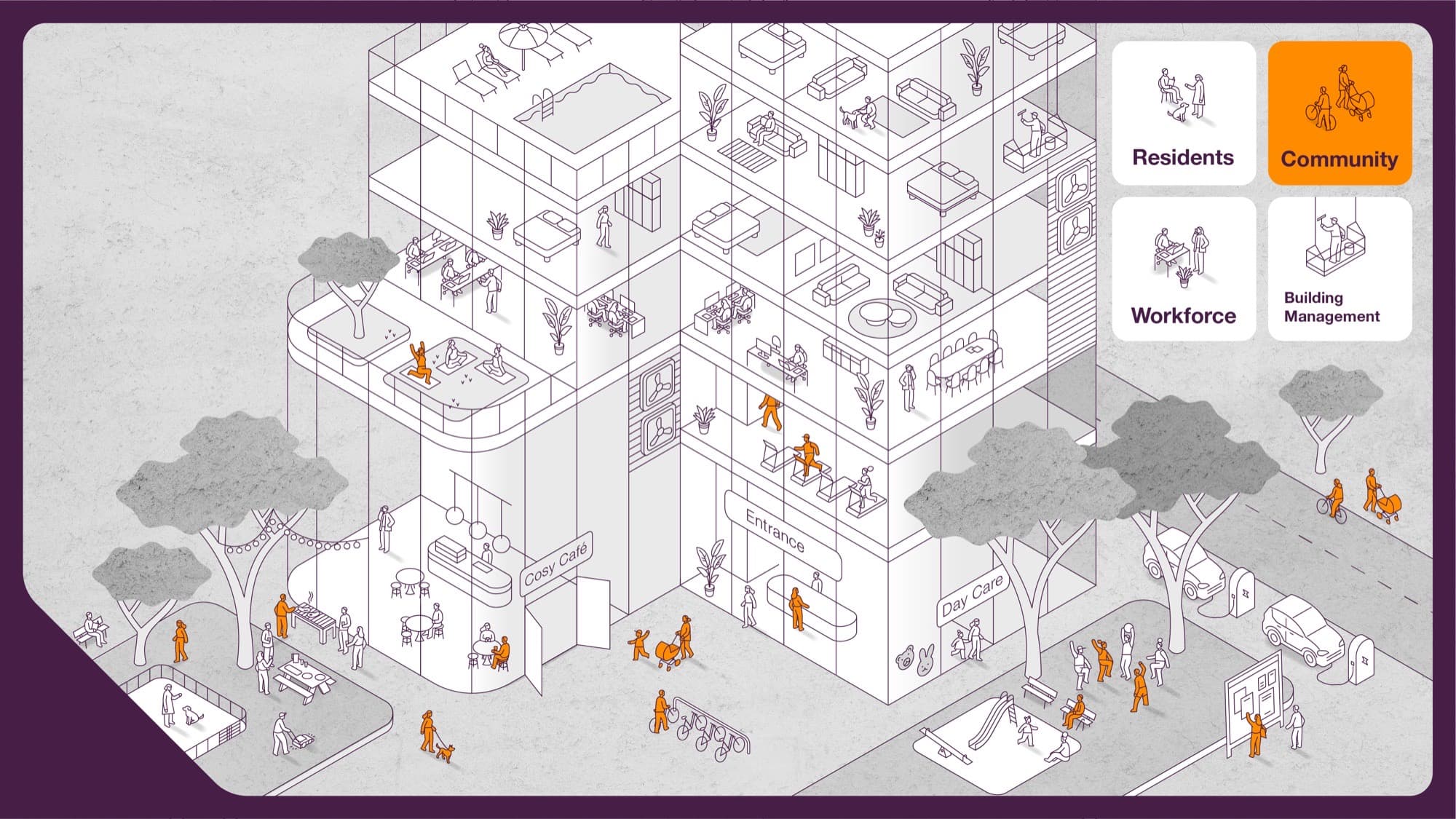
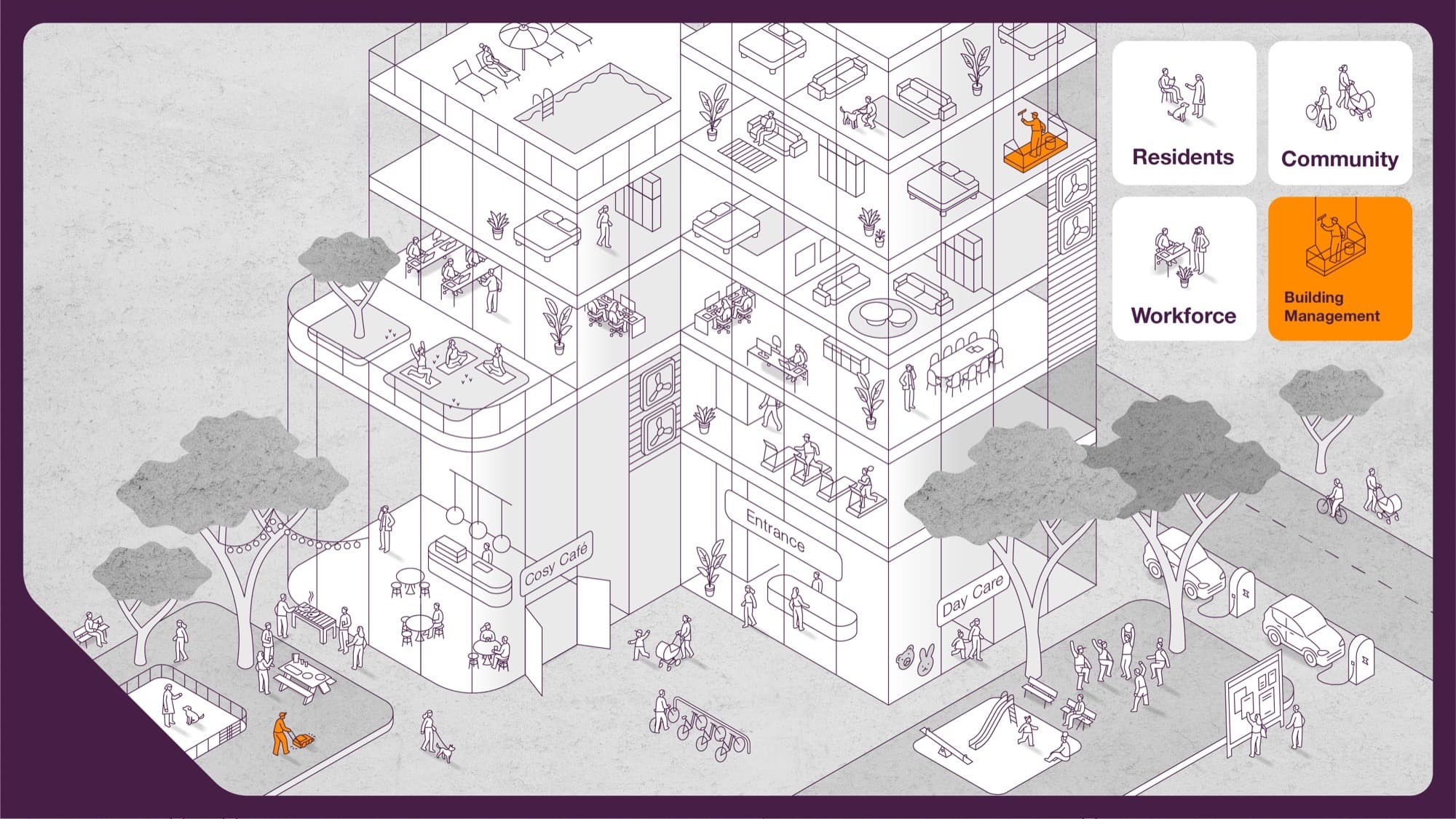
Four pillars
Everyone a building touches — and who that is depends on the sector.
The four pillars are the same everywhere. Who sits inside them is not: workforce means care staff in senior living and a small hospitality team in an office, and an office has tenants where a residential building has residents.
Students living at the property.
Often living away from home for the first time. Study space, sleep, safety, and whether the building produces a community or just a corridor of rooms.
The hospitality staff who run the building.
Front desk, cleaning, maintenance, community managers. A young, high-turnover workforce where conditions and progression show up directly in resident experience.
The neighbourhood the students live in.
Town-and-gown relations, noise, local employment and whether the scheme is absorbed into the area or resented by it.
The contractors keeping it running.
Outsourced cleaning, security and maintenance, scored where those services sit outside the operator's own payroll.
Asset and effort
Every pillar is scored twice: on what the building is, and on what its operator does.
It is the split that lets an older asset with excellent management outscore a new one that was built well and then left alone.
Asset indicators
All indicators pertaining to the physical characteristics of the building.
Effort indicators
All programming, services, or organised events beyond the passive, physical characteristics of the building.
 Residents
User Facilitating Amenities
4 of 6 shown · 12 more options in this indicator
 Residents
Stimulating Community Engagement
3 of 6 shown · 4 more options in this indicator
Three of the 40+ indicators, with some of their options. Tick and untick them to see how an indicator is built.
See how asset and effort are scoredBuilt on proven expertise
The framework is new. The people behind it are not.
Spire was designed by people who have built industry-wide measurement before, alongside operators and investors who know what an assessment has to survive in practice.
Founders

Dr. Martijn Stroom
Founder and CEO, Spire
Ph.D. in Real Estate Finance (2023). Leading Spire since 2021.

Dr. Nils Kok
Professor of Real Estate Finance, Maastricht University
Co-founder of GRESB (2009), founding team GeoPhy (2016), Investment Committee BPF Bouw.

Jill Brosig
Chief Innovation Officer, Harrison Street
Senior Managing Director of all global Harrison Street impact initiatives.
Advisory board
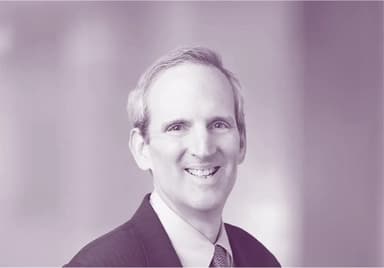
Dr. Jacques Gordon
Director of the Graaskamp Center
Former Global Strategist at LaSalle Investment Management.

Dr. Chris Pyke
Chief Innovation Officer, GRESB
Former Vice President of Research at the U.S. Green Building Council.

Fulya Kocak
Owner and CEO, Fulya Kocak LLC
Former Senior Vice President ESG at NAREIT.

Lauren Winkler
Founder and Managing Partner, Library Ave Consulting
Former Senior Director ESG and Innovation at Green Cities Company.
Sector and impact
Lauren Winkler
Founder and Managing Partner, Library Ave Consulting
Former Senior Director ESG and Innovation at Green Cities Company.

Rachel Mavrothalasitis
Principal and Founder, Reach&Root Partners
Chief Operating Officer at the Multifamily Impact Council.