

The social rating for real estate
The first universal rating for buildings on how they serve the people in and around them.
The gap
How does this building improve the daily life of the people in it?
You can find out what a hotel is like to stay in, and what a company is like to work for. For the buildings people actually live in, work in and live next to, there is no answer — only the operator's own account of it.
- No uniform definition of what social performance means
- No agreement on which data to collect, or how
- Assessment stays internal, so nothing signals to the market
“Booking tells you what a hotel is like to stay in. Glassdoor tells you what a company is like to work for. For the buildings people live and work in, there was nothing.”
 Dr. Martijn StroomFounder and CEO, Spire
What Spire is
One rating for how a building treats the people who use it.
Four pillars, 40+ indicators and 284 scoreable options, split between what the building is and what its operator does. Assessed against one framework, reviewed externally, and benchmarked inside your own sector.
What a rated property receives
The score block from a real 2026 Spire Benchmark Report.
What it measures
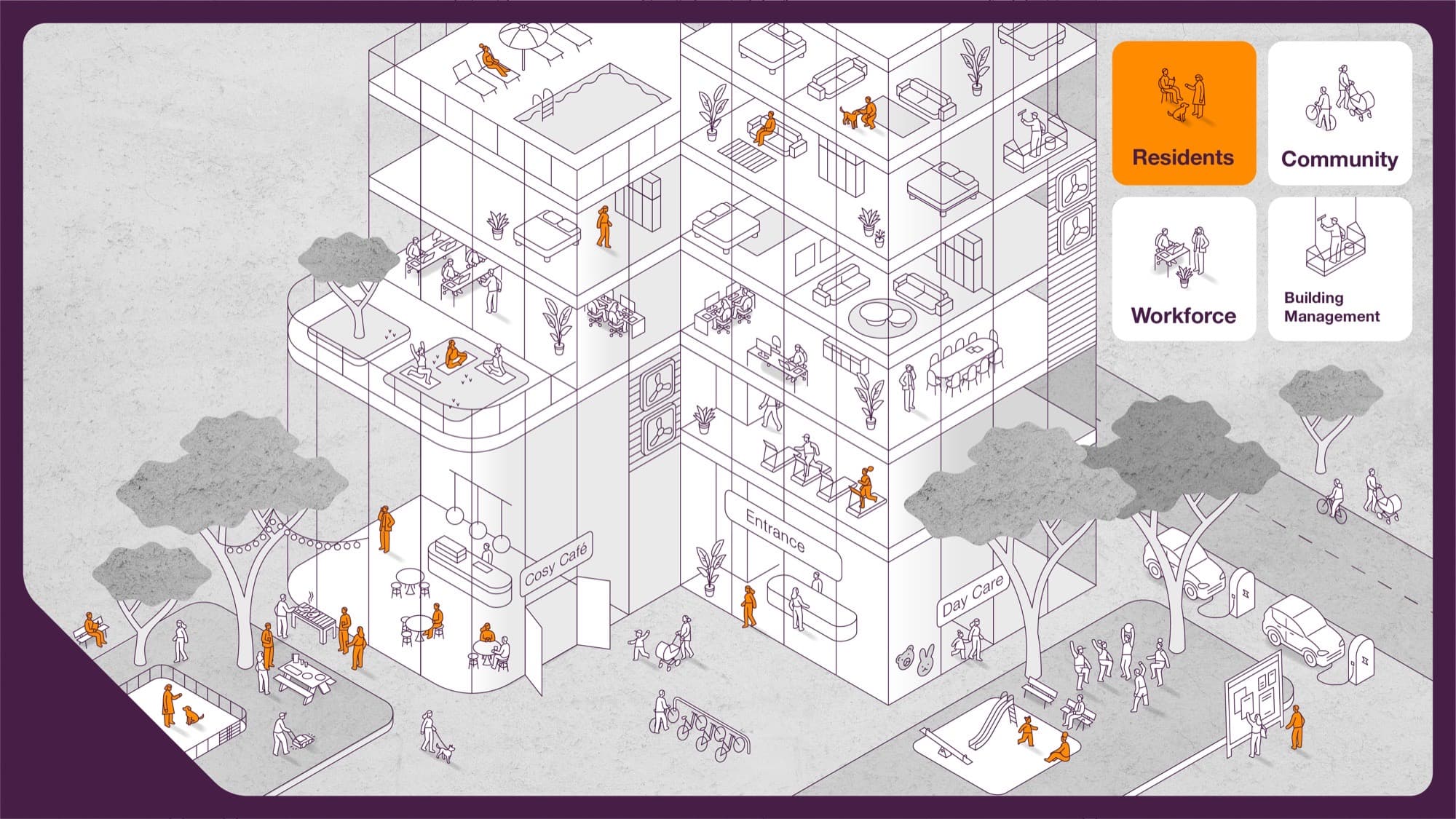
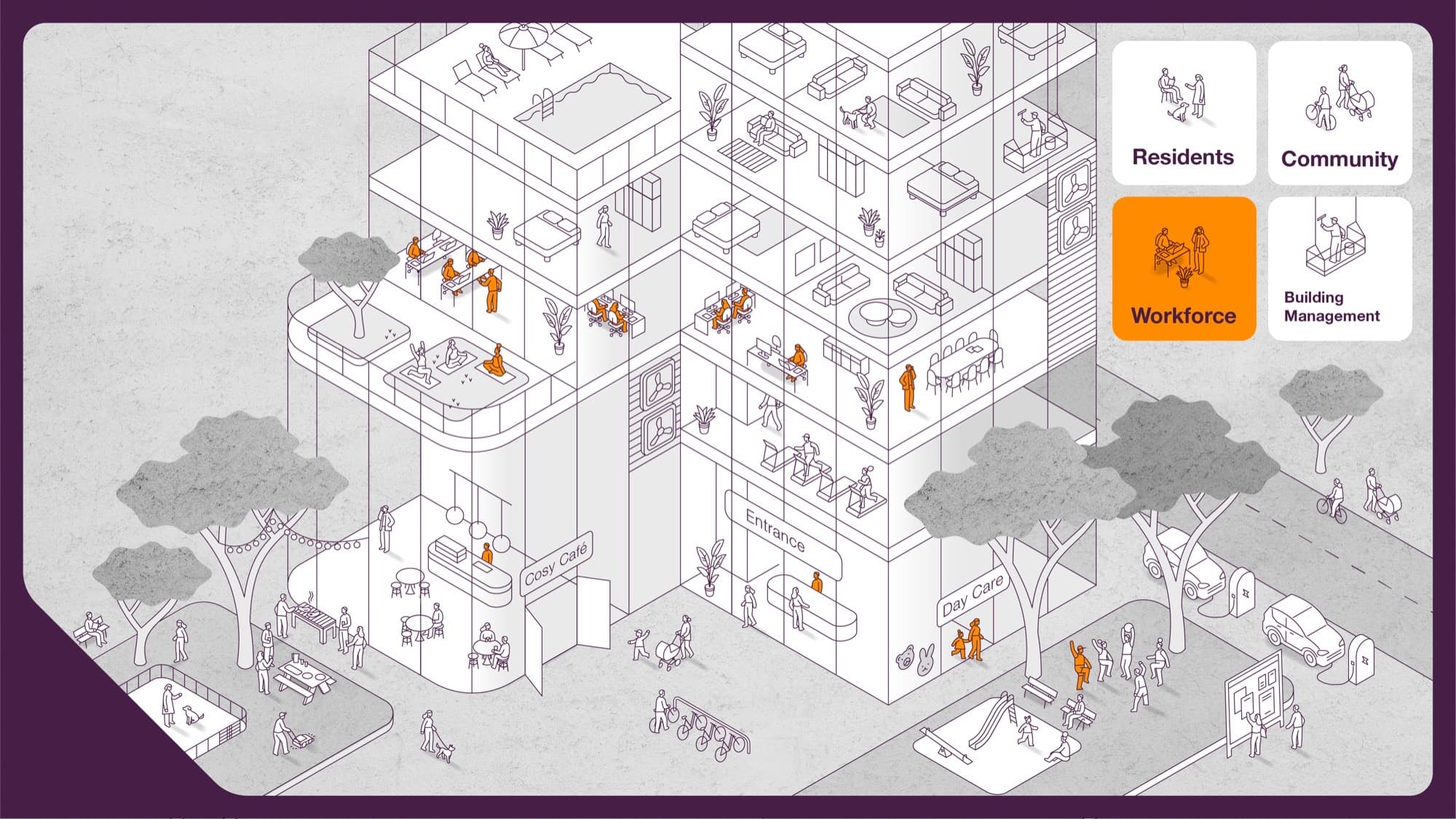
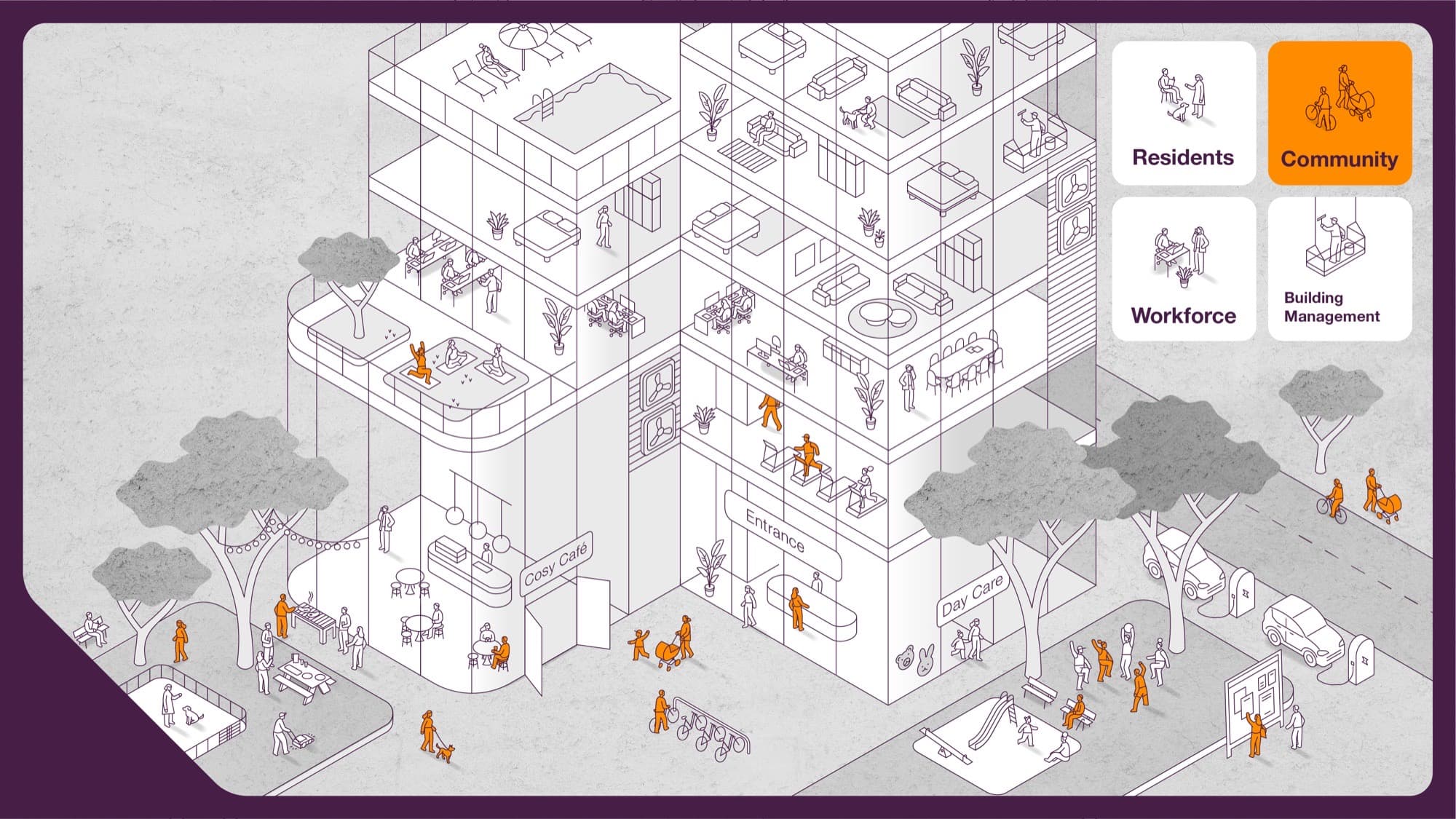
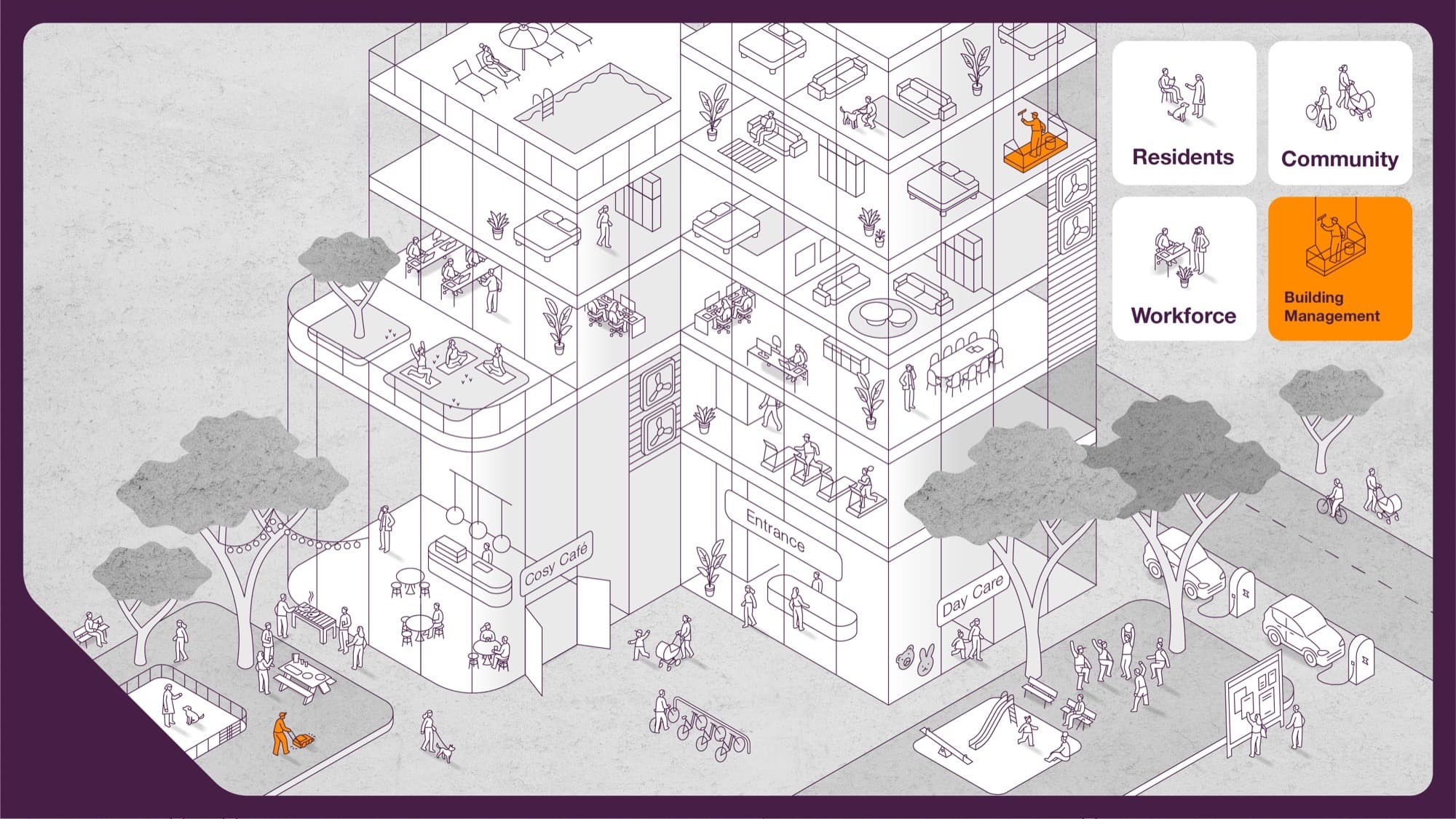
Four pillars. Everyone a building touches.
People living at the property.
Livability, amenities, satisfaction and the overall experience of living there. How well the asset serves the needs and expectations of the people in it.
The operational workforce supporting the operations.
Conditions, facilities and programmes for the people who run the building day to day — the staff whose working environment is the asset itself.
People in direct proximity to the property.
Local employment, affordability, displacement and how the asset sits in its neighbourhood. The people affected by a building without ever entering it.
The external workforce maintaining the property.
Scored where services are outsourced. If everything is internalised and already covered under Workforce, this pillar is not scored.
How it is scored
A score only means something next to the average.
Every pillar is placed against its own sector average, and every indicator inside it against the sector’s score for that same indicator. Scored 0-100, adjusted for sector-specific materiality.
average
Residents — asset indicators
What the building is: the physical characteristics of the living environment.
Residents — effort indicators
What the operator does: the programmes and services beyond the building itself.
What you get
A report to act on, and a mark to show.

The property report
Twenty-five pages for one asset: the rating, every pillar, demand fit, and the indicators worth acting on next.
Walk through a real one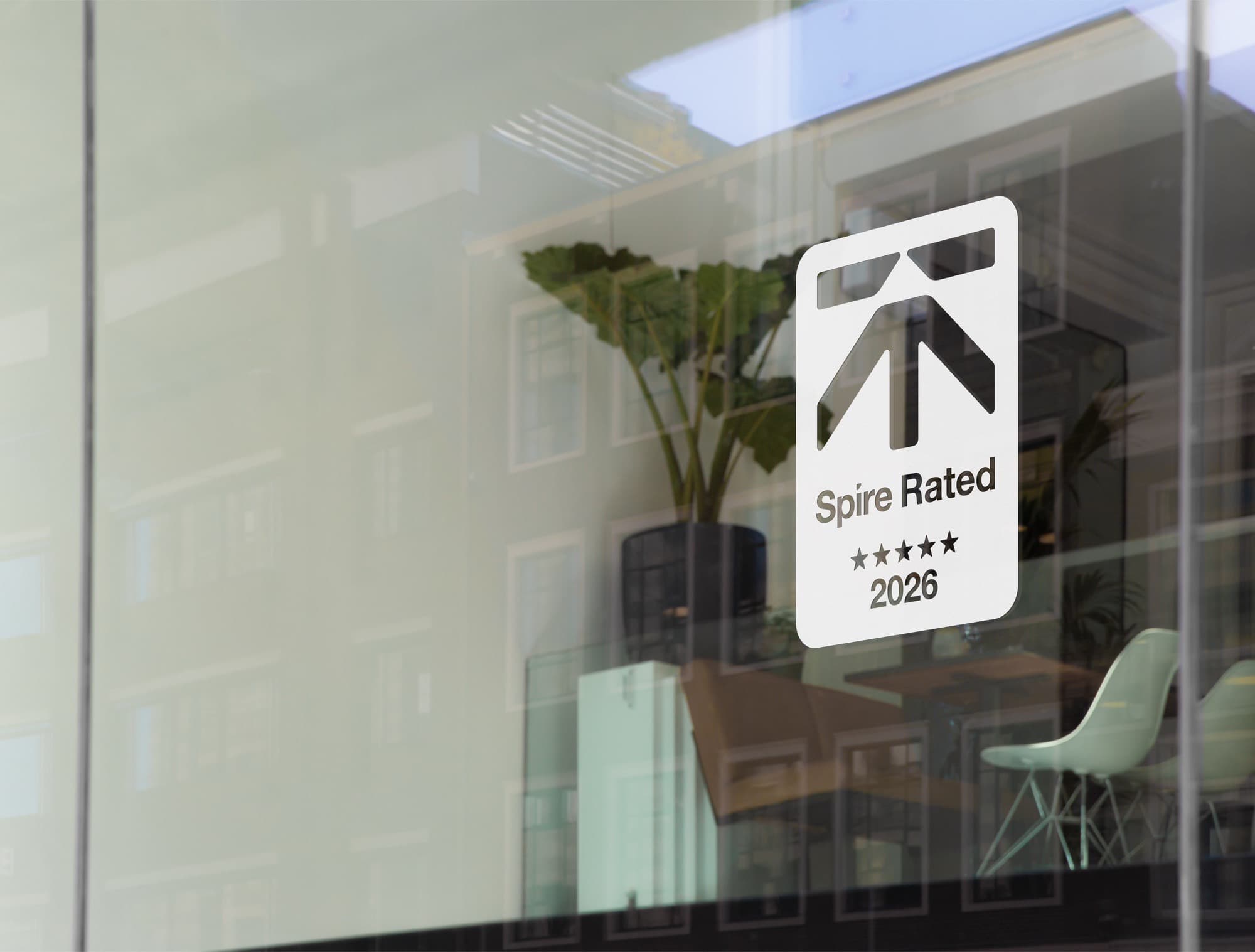
The Spire Rated mark
A rating nobody can see is a PDF. The mark and its star rating go on the building — client-facing for residents and staff choosing where to be, and a signal to lenders, partners and investors that the asset was measured.

What a rating changes
One rating. Three places it shows up.
A rating is only worth what it moves. This one moves three things at once — how the building is chosen, how it is run, and how it is funded — and all three end up in the same place.
Residents, workforce and the community
A rating the people outside the deal can actually read.
Dr. Martijn StroomFounder and CEO, SpireOwners, operators and asset managers
You already spend on this. Now you can show what it returns.
 Jill BrosigChief Innovation Officer, Harrison Street
Investors, LPs and lenders
Environmental performance became investable when it became comparable.
 Dr. Nils KokProfessor of Real Estate Finance, Maastricht University
Where Spire sits
Every other framework measures the building, the portfolio or the paperwork. Spire measures the people.
These are complements, not substitutes — most rated properties report to more than one. The point is that nobody else scores the social experience of a single asset against its own sector.
| Spire | GRESB | Fitwel | GRI | |
|---|---|---|---|---|
| Residents' lived experience | Measured | Not measured | Partly measured | Not measured |
| The workforce inside the building | Measured | Not measured | Partly measured | Not measured |
| The surrounding community | Measured | Not measured | Partly measured | Not measured |
| Outsourced building management | Measured | Not measured | Not measured | Not measured |
| What the operator does, scored apart from the building | Measured | Not measured | Not measured | Not measured |
| Benchmarked against your own sector | Measured | Measured | Not measured | Not measured |
| Scored at asset level | Measured | Not measured | Measured | Not measured |
Residents' lived experience
- MeasuredSpire
- Not measuredGRESB
- Partly measuredFitwel
- Not measuredGRI
The workforce inside the building
- MeasuredSpire
- Not measuredGRESB
- Partly measuredFitwel
- Not measuredGRI
The surrounding community
- MeasuredSpire
- Not measuredGRESB
- Partly measuredFitwel
- Not measuredGRI
Outsourced building management
- MeasuredSpire
- Not measuredGRESB
- Not measuredFitwel
- Not measuredGRI
What the operator does, scored apart from the building
- MeasuredSpire
- Not measuredGRESB
- Not measuredFitwel
- Not measuredGRI
Benchmarked against your own sector
- MeasuredSpire
- MeasuredGRESB
- Not measuredFitwel
- Not measuredGRI
Scored at asset level
- MeasuredSpire
- Not measuredGRESB
- MeasuredFitwel
- Not measuredGRI
- MeasuredMeasured
- Partly measuredPartly
- Not measuredNot measured
Get a rating
Every building tells a story. What is yours?
Assessment is open now, with the first ratings expected in 2026.